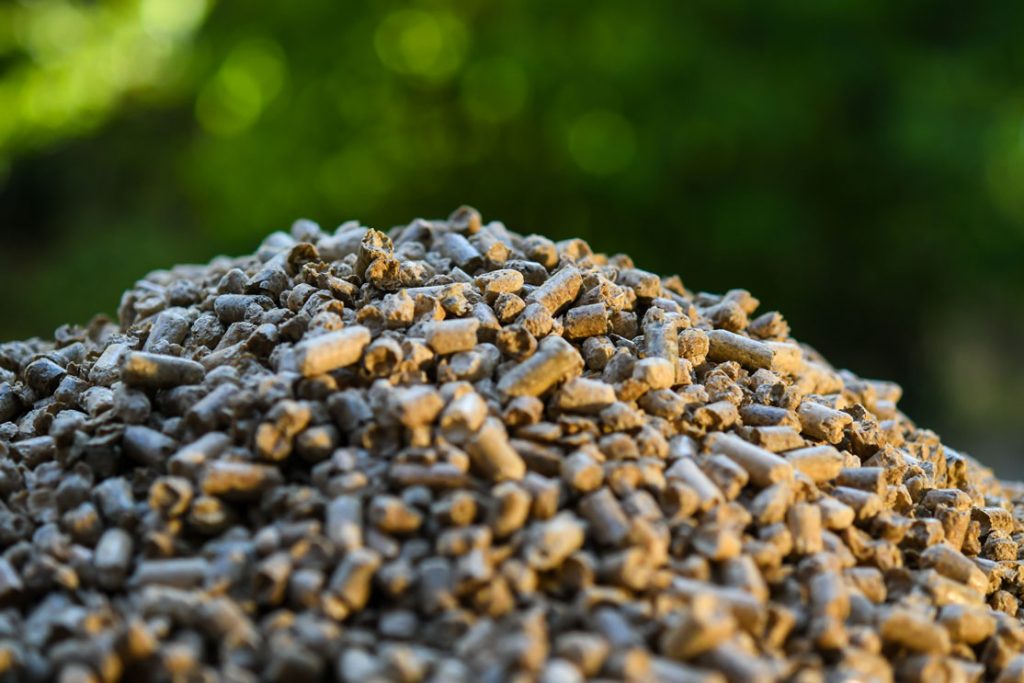
Pellets på trädbord

Table of contents

Pellets på trädbord

Table of contents

Pellets or heat pump? What's best for you?

Are you considering replacing your heating system with pellets or a heat pump? Then stop and think about what solutions are available today. Changing heating systems is not something you do in the blink of an eye. It is expensive, and you should consider future changes in the energy market.

A tip is to contact your local energy and climate adviser in the municipality to get an impartial consultation on which heating system is best suited exactly where you live. It may be that local circumstances make a certain heating system suit you better than anything else.

We go through some different heating techniques you can choose from – with pros and cons and approximate investment costs. Finally, we will talk about pellets and how this can affect your heating and what the environmental aspect is.

Hög med pellets

Oil - Fossil fuel as the source of household heat.

There is a strong focus on the environment and sustainability these days, of which the price of oil, for example, has risen over the past 20 years. This, in turn, has contributed to many households getting rid of oil boilers – or converting them to pellet boilers.

In 2008, there were just over 118,000 oil boilers in Sweden. A survey from 2016 shows that there were then just over 40,000 boilers left in Swedish households and industries. If you heat your house with oil, it may be a good idea to rethink. Converting your oil boiler to pellets is one of the most straightforward steps to lower your heating costs radically. If not for the environment, do it for your finances.

According to SPBi (Swedish Petroleum & Biofuels Institute), a total of 941,246m³ of oil was delivered to the Swedish heating market in 2016. The Swedish Environmental Protection Agency believes that the total carbon dioxide emission is close to 3 million tonnes, which corresponds to about 5% of the country’s total emissions. Read more about Sweden’s energy situation at the ministry of energy.

Political motivations may lead to the long-term heating of fossil fuel to be obsolete. In Norway, all heating with oil ended by 2020.

Oljepump i solnedgång

Switch to a heat pump

It is popular with Heat pumps. It is an efficient system that largely takes care of itself and can be used with renewable energy – as long as the power comes from renewable sources.


However, installing a heat pump is a high cost, and the price of running the heat pump can vary significantly from year to year. In addition, Sweden is dismantling nuclear plants and is moving to 100% renewable energy production – but critics suggest this will lead to a shortage of electricity and higher costs. This should be considered when you plan to install a new heating system in your house. If electricity is fairly cheap now, how will it be in cold winters, and how will it be when everyone charges their electric car simultaneously? What else will we use in the future that is dependent on electricity?

What does it cost to run a heat pump?

Will a heat pump ruin you? No, of course not, unless we hit some hard times in the energy market as in 2022.

What you need to understand is that many heat pumps are quite expensive. On top of that comes an installation cost.

Värmepump

You only pay what the heat pump consumes in electricity, depending on the seasons and model. During a cold winter, there will, of course, be higher costs and will be affected by external factors you can not influence. Add the ongoing energy crisis as of 2022 and a electricity driven heat pump can become your worst enemy.

However, what you can do to reduce the heat pump load is to ensure that all windows and walls are adequately isolated. Of course, you can also secure a good electricity contract when the price is low, and if possible, install solar panels to generate your own electricity. 

How much does it cost to run a heat pump?

Will a heat pump ruin you? No, of course not, unless we hit some hard times in the energy market as in 2022.

What you need to understand is that many heat pumps are quite expensive. On top of that comes an installation cost. You only pay what the heat pump consumes in electricity, depending on the seasons and model. During a cold winter, there will, of course, be higher costs and will be affected by external factors you can not influence. Add the ongoing energy crisis as of 2022 and a electricity driven heat pump can become your worst enemy.

However, what you can do to reduce the heat pump load is to ensure that all windows and walls are adequately isolated. Of course, you can also secure a good electricity contract when the price is low, and if possible, install solar panels to generate your own electricity. 

Going out with a general price picture of what it costs to run a heat pump will be next to impossible. Naturally, it varies depending on the type of house, what electricity contract you have, and which heat pump you choose.

You can also supplement your heating with a pellet stove.

What is the difference between various types of heat pumps, and what you should know?

There are various heat pumps to choose from. We list the most common techniques with pros and cons.

Luftvärmepump

Geothermal heat pump

A deep hole will be drilled into the ground. How deep you have to go depends on how much heating you need and how far you have to drill to reach the solid rock. So first you drill through the soil layer, then you drill through the rock. Ensure that the quotation states that the active borehole depth is specified not to get an unwelcome surprise bill.

Active borehole depth is the part of the borehole where the collector is in contact with the rock and the medium transporting the heat. Groundwater is the most common.

Remember that if you are going to install geothermal heating, you have to register with SGU (Swedish Geological Survey)

Pros and cons of geothermal heating system.

The advantages of geothermal heating are that it is efficient and requires very little maintenance. In addition, it is very environmentally friendly. However, it is a large investment of which drilling is a significant part. It also requires a large area of land to be excavated during installation. Also, be aware that you may have to drill deeper than you expected.

Investment cost

Between 10,000€ to 16,000€. Of course, the price varies depending on preparatory measures such as drilling but also depending on which pump you need and how much surface you need heat for. For a larger house, it can cost over 20,000€. Keep in mind that the installation should be done by a professional. *Prices are based on Swedish market prices in 2016.

Exhaust air heat pump

An exhaust air heat pump recovers heat from the house’s exhaust air ventilation. It generates heat and hot water through a water-borne system. It is common for newly built houses that this system is built in from the beginning. It is a relatively simple installation and does not require much space.
These heat pumps also function as a complement to houses that have direct heating and electric heating. This means that the pump can be connected to a fan element that dissipates the heat via the indoor air for those houses that do not have water-borne systems.

Pros and cons of exhaust air heat pumps

It is easy to maintain and install and contributes to good ventilation in the house. It is also a system that is very silent. If your house already has mechanical ventilation, it is positive to install exhaust air heating.

However, it is not suitable for houses with a significant heat demand or has high energy consumption. Suppose your house is old and poorly insulated, or major interventions are required to install a water-borne system. In that case, an exhaust air heat pump is not recommended. The system also requires some maintenance, such as filter replacement.

Investment cost

Depending on the model and brand, it costs between 3000€ – 8000€. Including installation, it will be about 6000€ – 10000€, depending on which agreement you enter into with the installer. Remember it should be installed by a professional.

Air/Air- heat pump

This type of pump is widespread in many houses. An air to air heat pump cannot produce hot water, which unfortunately means that a supplementary solution is required.

The heat is instead airborne and is spread via an integrated fan. Keep in mind that this technology is better for houses with an open floor plan. It can be challenging to get an even temperature in all rooms, depending on how the system is integrated into the house. This makes the location of the heat pump extra important.

If your house has direct-acting electricity, it may be a good idea to install an air/air heat pump. You can quickly save on the cost of installation.

Instead, the heat is airborne and distributed via a fan integrated into the indoor part. Keep in mind that this technology is better for open-plan houses, as it can be difficult to get an even temperature in all rooms depending on how the system is integrated into the house. This makes the location of the heat pump particularly important.

If your house has direct electricity, it may be a good idea to install an air-to-air heat pump as you can quickly save on the cost of installation.

Pros and cons of air/air heat pumps

The advantage lies in the price and that it is quite efficient in houses with an open floor plan. It is also an excellent complement to direct-acting electricity. From an environmental point of view, it is relatively well located. What you should keep in mind is that it is powered by electricity, but if you install an air-to-air heat pump as a complement to direct-acting electricity, you still have reduced energy consumption, which is a thumbs up from an environmental point of view and your finances. But there is more to do.
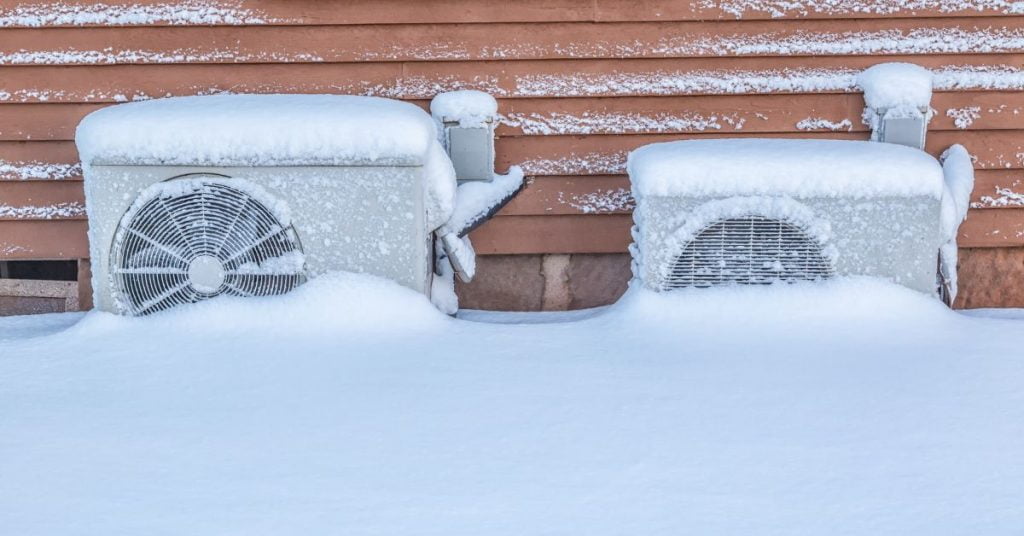
A disadvantage, however, is that this system does not provide any heat at all when it is freezing outside. Besides, this is not a sound system for large houses.

Investment cost

Between 1000€ to 3000€ based on model and brand. Installation is usually around 500€. Keep in mind that the installation price may vary based on the measures that must be performed. The installation should be performed by a professional.

Heating with pellets

The immediate difference in choosing between pellets or heat pumps is the price, environmental thinking, and work effort. According to the latest statistics based on 2016, there were just over 83,000 pellet burners in Sweden. The main argument against using pellets for heating seems to be that it requires some work, which is a pretty stark contrast to heat pump systems that most people see as a self-propelled and maintenance-free systems – although these need to be reviewed from time to time.

två händer formar ett hjärta med pellets.

Pellets, on the other hand, are both cheap and environmentally friendly. It is classified as bioenergy and is nature neutral. This means that the same amount of carbon dioxide that the tree once absorbed is released into the air and is in turn, absorbed into the next tree. Since we in Sweden also have replanting protection, the forests are not depleted. No trees are felled just for the production of pellets. Only residual lumber, i.e. those that cannot be used as lumber, are converted into pellets.

två händer formar ett hjärta med pellets.

The immediate difference in choosing between pellets or heat pumps is the price, environmental thinking, and work effort. According to the latest statistics based on 2016, there were just over 83,000 pellet stoves in Sweden. The main argument against using pellets for heating seems to be that it requires some work, which is a pretty stark contrast to heat pump systems that most people see as a self-propelled and maintenance-free system – although these need to be reviewed from time to time.

Pellets, on the other hand, are both cheap and environmentally friendly. It is classified as bioenergy and is nature neutral. This means that the same amount of carbon dioxide that the tree once absorbed is released into the air and is in turn absorbed into the next tree. Since we in Sweden also have replanting protection, the forests are not depleted. No trees are felled just for the production of pellets. Only residual lumber, i.e. those that cannot be used as lumber, are converted into pellets.

What does it mean to use wood pellets for heating?

You install a pellet burner with an associated feed system and storage that you fill with pellets. You can either buy bags of pellets or buy them in bulk.

You must clean the pellet burner or pellet stove from time to time. We recommend that you use a cyclone dust collector such as Whirlwind so you can quickly empty the burner from ashes with a regular vacuum cleaner.

Pros and cons of pellets

Pellets are cheap, and based on which heating system you have today, it can be a significant part you save on pellets. It is also environmentally friendly and consumes very little electricity. The emission is naturally neutral, i.e. you do not emit more carbon dioxide than what has already been absorbed by the tree.

However, it is a more significant workload to handle pellet. You need to buy and carry 25kg bags or order home pellets in bulk. Nevertheless, this can be facilitated by recurring deliveries from your local wood pellet distributor. You can easily make an order by phone or online.

There are systems that facilitate the handling of pellets. Pellvac system 1 and system 2 are designed so that you can have bulk storage out on the plot. The system automatically picks up pellets with a vacuum. It delivers them to the burner, which significantly limits your work effort.

Investment cost

The cost of installing heating systems with pellets is between 5000€ – 10000€.
Pellvac’s vacuum system costs between 3000€ – SEK 3600€. Keep in mind that shipping and installation are not included.

Investing in a pellet plant is a profitable investment. The cheap operation and low electricity consumption mean that you save the investment in a couple of years. On top of that, you can count on the facility in most cases, increasing the value of your property.

Pellets vs Heat Pump - did you get wiser?

Being in the concept of choosing between different heating systems can be a challenging task. We at Pellvac advocate pellets in front of heat pumps. It is cheap and environmentally friendly and reduces our electricity dependence. However, comprehensive measures are required if Sweden is to achieve the set goal of 100% renewable energy by 2040. We believe that we can get far by balancing and lifting the burden of electricity production.


But we are also aware that pellets do not suit everyone. So when it comes to pellets or heat pumps, we recommend first consulting with local energy and climate advisors.

If you want to know more about pellets, you can read more here. <— (Swedish site)

Share the article on social media.

Want to know more about Windcleaner Industrial Cyclones or Industrial Vacuum Cleaners?

dust extractor cyclone

Would you like to know more about the Pellvac chip vacuum cyclone?

Fill in the form and we will contact you. If you fill in your address, we can check the shipping price in advance and give you a full quote.

Want to know more about pellet systems with vacuum suction?

Fill in the form and we will contact you. Consultation is free of charge. We will assess your circumstances and advise you on the best system for you.